Got Questions?
BOREHOLE DRILLING
QUESTIONS ANSWERED
Everything you need to know about borehole drilling in Gauteng — costs, depth, water quality, permits and maintenance.
Still unsure? Call 063 082 5674Common Questions About Borehole Drilling in Gauteng
How deep are boreholes drilled in Gauteng?
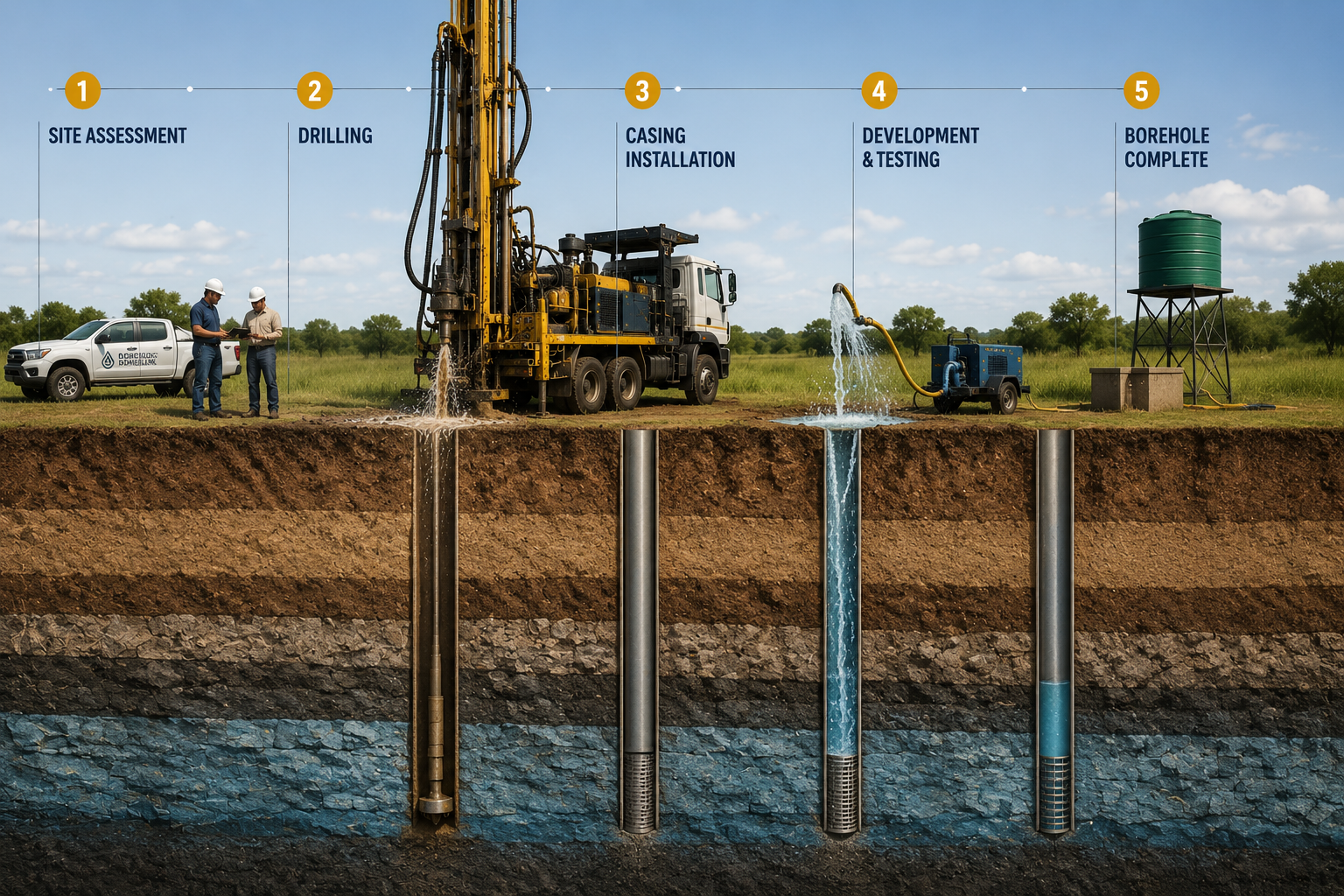
In Gauteng, boreholes are typically drilled to depths of 40–100 metres, depending on the local geology and water table. Some areas with deeper aquifers may require drilling to 120 metres or more. We assess each site individually to determine the optimal depth before any drilling begins.
How long does borehole drilling take?
Most residential boreholes are completed within 1–3 days. This includes drilling, casing installation, and initial yield testing. Pump installation, if required separately, adds another day. Larger commercial or agricultural projects may take longer depending on depth and site conditions.
How much does a borehole cost in Gauteng?
Borehole drilling typically costs R800–R1,200 per metre drilled. A complete installation including drilling, casing, pump, and pressure system ranges from R45,000–R90,000 for most residential properties. We provide detailed, itemised quotes after a site assessment — no hidden costs.
Is borehole water safe to drink?
Groundwater quality varies across Gauteng. While most borehole water is safe for general household use, we recommend water quality testing before drinking it untreated. Some areas have elevated mineral levels or bacteria that require filtration or treatment. We offer water quality testing as part of our service.
Do I need a permit to drill a borehole in South Africa?
For domestic use under 10,000 litres per day, you typically do not need a permit — just registration with the Department of Water and Sanitation. For larger volumes or commercial use, permits may be required. We advise on the exact requirements for your specific situation and property.
How do I know if my property has groundwater?
Most properties in Gauteng have groundwater at some depth. We conduct site assessments using geological data, neighbouring borehole records, and sometimes geophysical surveys to determine the likelihood of finding water and estimate the probable depth before committing to drilling.
What is the success rate of borehole drilling?
In Gauteng, we have a success rate of over 90% for finding usable water. Success depends on location, geology, and depth. Our thorough site assessment helps identify the best drilling location and gives you realistic expectations before a single metre is drilled.
Can a borehole run dry?
Boreholes can experience reduced yield during drought periods or if over-pumped beyond their sustainable rate. Proper sizing of your pump to match the sustainable yield prevents most issues. We test every borehole to determine its sustainable extraction rate before recommending a pump.
What pump do I need for my borehole?
Pump selection depends on borehole depth, yield, and your daily water requirements. We recommend submersible pumps for most installations, sized to match the sustainable yield. Solar pumps are an excellent option for load shedding resilience — no grid power required.
How often should a borehole be tested?
We recommend annual maintenance checks including yield monitoring and electrical inspection. Water quality testing should be done initially and then every 2–3 years for domestic use, or annually if you are using the water untreated for drinking.
What happens if you do not find water?
While rare with proper site assessment, sometimes boreholes do not yield sufficient water. We discuss this possibility openly before drilling begins. Drilling costs still apply for the depth reached, but we work with you to explore alternatives and will never charge for work not done.
Can I use borehole water during load shedding?
Standard electric pumps will not work during load shedding. However, we offer solar pump systems that operate completely independently of the grid. You can also connect your pump to a generator or inverter system for backup power during outages.
How much water can a borehole produce?
Yields vary widely — from 500 litres per hour to over 10,000 litres per hour for high-yield boreholes. Typical residential boreholes in Gauteng produce 1,000–3,000 litres per hour, which comfortably meets the daily needs of most households.
What maintenance does a borehole need?
Annual pump inspection, water level monitoring, and electrical checks are recommended. Every 5–10 years, the borehole may need rehabilitation — cleaning and redevelopment — to maintain optimal yield. Proper maintenance significantly extends the life of your system.
How long does a borehole last?
A properly constructed borehole can last 50 years or more. The pump typically needs replacement every 10–15 years depending on usage and water quality. Regular maintenance and correct pump sizing ensure maximum lifespan for both the borehole and all associated equipment.
Explore More
Detailed guides on our services and the areas we cover across Gauteng.
Our Services
Ready to stop relying on municipal water?
Call 063 082 5674 or request a free site assessment today.
Licensed & insured · Serving all of Gauteng · Mon–Sat 7am–6pm